East Essex Smallholders Chitchat Headline Animator

CONTACT EESG

To Contact EESG
Please Email:
Danielle.Perkins@yahoo.co.uk
or 07854595640

Sunday, 24 May 2015

Why chickens stop laying eggs

Two hens

Janice Houghton-Wallace looks at why chickens stop laying eggs.

It seems natural enough, doesn’t it – chickens lay eggs; and why would they not? Well, we have to remember that chickens are living creatures, and therefore, even though man has developed commercial hybrids that are little egg machines, not every feathered girl is going to deliver the goods at all times.

There are many reasons why chickens cease laying, or even don’t begin to lay in the first place. It could be as a result of age, diet, lighting, environment, health, weight, weather, moult, stress, broodiness, breed, predators, lice – the list can be seemingly endless.

Pullets are often bought as ‘point of lay’ birds, which actually relates to their age rather than the fact that they are guaranteed to lay eggs soon. It is certainly not a ‘trade description’ that they will soon start laying! A pullet is sufficiently developed to begin the egg-laying cycle at between nineteen and twenty-two weeks of age, but this is an average and some pure-breeds can take longer.

A commercial hybrid pullet may well begin to lay almost to the day when she should because this is what they have been bred to do. They will also lay anything between 250 and 300 eggs a year, but this number will decrease with each year. That is why commercial laying birds are kept for two years of production and then either dispatched or sold on as (previously) ex-battery hens, or (currently) ex-colony cage hens. The outdoor hybrids are still good producers too, laying around 250 eggs or even more in the first three or four years. The pure-breeds will generally lay fewer eggs, but some do lay more than others.

When hatched in the spring, pullets usually come into lay in the early autumn, but if hatched later in the season it could be relatively longer before they start to lay, possibly not until the late spring of the following year. The later in the year birds are hatched, the longer it takes for them to develop fully. If pullets are too young and therefore not sufficiently developed they will not lay.

FEED

It is essential that laying birds are given a correct feed formulation. The right amount of protein, fats, minerals, vitamins and calcium are required to assist the body to produce eggs, and these can be found in layers’ rations. Layers’ pellets or meal are fed in the morning, and grain, usually in the form of wheat, is fed in the afternoon. Mixed poultry grit should also be available. Hens will not consistently produce good eggs if they are not fed correctly, and wheat alone, together with grass and scratchings, is definitely not sufficient.

On the other side of the coin, hens will not lay if they are too fat. The correct diet with only a few treats is the best way of keeping them fit.

DAYLIGHT

Natural livestock reproduction is ruled by the length of daylight, and chickens need around fourteen hours of light for their egg-laying cycle to react. This is why everyone has a glut of eggs come February and March onwards, with the lengthening of the days. You can bring hens forward with egg laying by providing a little light in their housing, and surprisingly it does not have to be very bright, but having a timer-controlled light come on early in the morning will make a difference. This is better than extending the day in the evening, because then, when the light goes out, the birds would be suddenly left in darkness, which could panic them if they are not already roosting.

ENVIRONMENT

The environment in which hens are kept might not engender sufficient confidence for them to lay an egg. A chicken needs somewhere it can sit safely for a period of time whilst the egg is laid, so they look for a nest box or some other hidden area where they will feel comfortable. Nesting areas should be provided with clean straw or shavings, and it might also be worth putting a ‘pot’ egg in a nest box as encouragement.

HEALTH

Only healthy chickens lay eggs, so if they are suffering from ailments or disease this will curtail egg production. A chicken’s body knows that it cannot do two things at once, so if the bird is sick, approaching the moult or going broody, it will cease to produce eggs.

Internal and external parasites can eventually affect egg laying. Severe worm infestation can interfere with the internal organs, which can in turn disrupt the egg-laying procedure. External parasites can also irritate birds and at worst can cause anaemia and even death. Mites are the most prominent parasite problem, and if there is a red mite infestation tiny red spots can be found on eggs – if the birds are still laying.

WEATHER

Weather, too, will play a big part because severe wind or extremes of heat or cold can disrupt the egg cycle. Chickens loathe strong winds and in these conditions egg laying can cease almost overnight.

STRESS

Stress upsets the natural operation of a chicken’s bodily functions, and egg production can easily be affected if a birds is frightened, moves house, is taken to a show or auction, or moved to new premises. Chickens thrive with a set routine that is not interrupted, which means they should be fed, watered, cleaned out regularly and shut up at the same time each day. Birds of prey flying around can induce severe stress in chickens, as can barking dogs and children running around or chasing them. They should not be chased, especially if they are in lay.

Finally, your hens may be laying, but the eggs could be disappearing through theft! If eggs are not collected on a regular daily basis some chickens are tempted to eat them, and this vice is then difficult to stop. Rats and crows will also steal them. Crows will even sit and wait until they hear the clucking of a hen after she has laid, at which point they will dive in, grab the egg by sticking their beak into the shell, and then fly off.

Janice Houghton-Wallace is founder of The Turkey Club UK, set up in 2001 to promote standard varieties of turkey.

The aim of the club is to :

  • Conserve and promote all pure varieties of turkey
  • To identify and maintain breed standards
  • To encourage and assist with advice, anyone wishing to keep turkeys
  • Work towards establishing a higher profile for the turkey, as an exhibition bird and utility species of poultry.
  • Whenever appropriate, promote the turkey by education and illustration.
Source: www.homefarmer.co.uk

Thursday, 14 May 2015

View this email in a web browser
The Smallholder Series
Heading
mainpic
   
quote
   
 
The lambs are bouncing around the fields, your vegetable garden is springing to life - yes, May does indeed seem like the perfect month to try something new. You could try hatching some chicks, or plant a vegetable that you haven't grown before - the possibilities are endless.


If seeing all the lambs in the fields is inspiring you to breed your own, order a 'Breeding Flock & Management Planner' to help you plan your year ahead. Our DVD programmes 'Sheep on Your Smallholding' will also give you expert advice on sheep husbandry and welfare.
Make sure your buy a copy of the Spring edition of Practical Sheep, Goats & Alpacas Magazine, which has a comprehensive checklist of everything you need to know about rearing healthy lambs - written by Carole Youngs of The Smallholder Series.
 Sheep DVDs 


dwarf french beans
 5 things to remember
...cattle breeds
for smallholders

1Dexter - small, great for low acreage, ideal for milk and beef
1Shetland - small, docile, fast-growing, easy-calving and hardy
1Lowline - small, easy to handle, excellent for beef
1Belted Galloway - hardy, distinctive look, excellent beef
1Traditional Hereford - docile, easy to handle, high-quality beef, thrive off grass and forage
For more information, see the list ofcattle breeds on our website


Simon Dawson, smallholder and author of 'The Self Sufficiency Bible' has written a great review of our DVD 'A Guide to Sheep Butchery'. Here's a snippet, you can read the rest on our website.
"The butchery section is particularly good. I loved the way Adam and the butcher showed the steps in such a clear and doable way, and found my fingers itching to have a go, and I'm sure even if you've never butchered anything in your life you'll watch this and feel confident in giving it a go."
 Sheep DVDsA Guide to Sheep Butchery 
   
 
things to do on your smallholding this month
May is another busy month. The days are lengthening and there have been some beautifully warm days to help the growth in your vegetable plot. The warm weather can bring early cases of flystrike though - so keep an eye on your flock. Here are some top tips from our 'Things to Do' pages - available on our website.
  • Sheep - as the weather warms this month, watch out for early cases of flystrike. It's not recommended to use a 'pour-on' product this close to shearing time as it will leave a chemical residue on the fleece.
  • Chickens - if you like natural remedies, offer the hens some garlic granules mixed with their layer of corn - garlic can act as a repellant to harmful gut worms, but don't rely on it totally.
  • Pigs - as the weather gets warmer, make sure your pigs have shade at all times - a hot pig is not a happy pig!
  • Vegetable garden - hoe in the morning so the sun desiccates the uprooted weeds, and water in the evening when the heat of the day is gone.
  • Horses - regularly collecting the muck from your horses' fields will massively reduce their exposure to gut worms and improve their overall health.
Keep up with all your smallholding tasks with our comprehensive guides to sheep,chickenspigs, the vegetable garden and equines. Just click on an image below.
 
    
Things to do This MonthSheep Things to do This MonthChickens Things to do This MonthPigs Things to do This MonthVegetable Garden Things to do This MonthThings to do Equines
    
The Smallholder Series DVDs
 
 
WEBISTE HIGHLIGHTS
Farm Diary
Lambing 2015
 
Article of the month
recipe of the monthArticle of the month
 
     
leeks
     
 
seasonal recipes
Early crop dishes - what's available
in your vegetable plot now?
   
    
facebook
    
 
FeedbackWe really appreciate getting feedback from our customers - your views on our DVDs, suggestions for articles you'd find useful / helpful, and how you initially heard of us.
You can leave feedback by emailing us - see the feedback page on our website.
Weekly BulletinsFollow us on Facebook and Twitter for weekly smallholding news.
 
 
Social network links
www.smallholderseries.co.uk

Compost Toilets

Compost toilets: introduction

What are they?

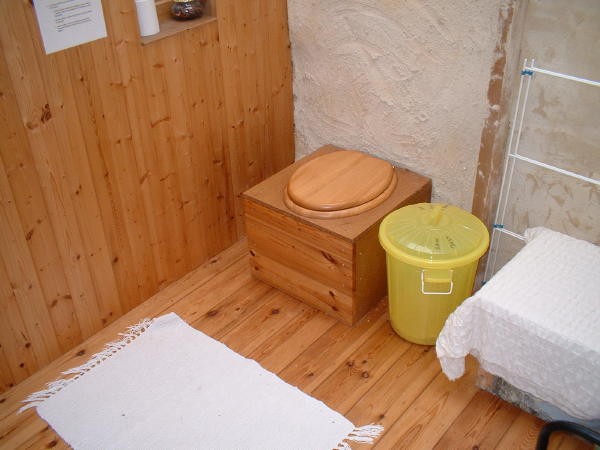
A compost toilet is a dry or waterless toilet, i.e. one that doesn’t use water to take the waste somewhere else; it also allows natural processes to produce useful compost, after a resting period depending on the type of toilet.
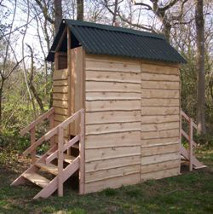
Outdoor compost loo, by the Thunderbox Collective.
DIY compost loos
There are usually two chambers – one in use and one resting. A typical toilet would use one chamber for a year, then change to the second chamber and allow the first to decompose for a year before emptying. They don’t smell, as long as there is a vent pipe, and a drain to take away excess liquid.
A handful of a soak (straw or sawdust etc.) is dropped into the toilet after each use. This is because bacteria like to eat a balanced diet of carbon and nitrogen, and as human waste contains a lot of nitrogen, if they don’t get enough carboniferous material (like sawdust, straw, hay, shredded paper) they will give off excess nitrogen in the form of ammonia, which makes the loo smelly.
Compost loos don’t have to be outdoors; if done properly, there will be no smells, and an indoor toilet will be more comfortable.
The soak allows oxygen into the pile, and absorbs liquid. This allows the pile to decompose aerobically to produce nitrates, phosphates and sulphates. Without a soak, the pile will decompose anaerobically and produce methane, ammonia and hydrogen sulphide – all smelly and not very useful.
Human pathogens don’t like conditions outside the human body, so almost all will be dead after a few hours. Only one type of roundworm egg can survive a year-long decomposition period, and even that’s not going to survive washing and cooking. But even though it is a tiny risk, you could use the compost on fruit trees and bushes rather than in the vegetable garden.
A tree bog is a type of outdoor compost toilet with nutrient-hungry trees planted around it. Solid and liquid wastes are simply deposited into a hole in the ground, and the tree roots absorb the nutrients.
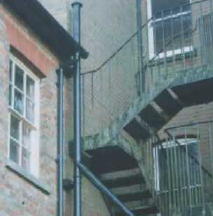
Vent pipe: in this case vent pipes from each chamber meet to vent any smells above the gutter line.
Off-the-shelf compost loos
You can also buy off-the-shelf toilets with one chamber – for inside or outside use.

What are the benefits?

Main benefits
    • the solid waste is dealt with on site, and doesn’t have to be treated with chemicals in sewage farms, or end up in waterways, where it causes pollution and algal blooms
    • saves water – you don’t have to use one resource (pure drinking water) to flush away another (fertiliser)
    • organic matter is allowed to go back to the soil where it belongs, improving soil structure and nutrition
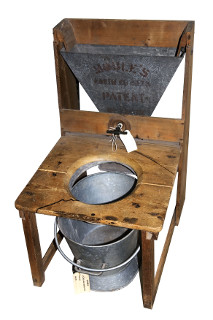
Henry Moule’s earth closet almost became the standard Western toilet in the 19th century.
Other benefits
  • no chemical cleaners or bleaches are used in the toilet
  • they don’t contribute to the sewage sludge that is often dumped in landfill, or more controversially, put on to agricultural land uncomposted
  • as long as the decomposition is aerobic, there will be no greenhouse gas emissions
  • no electricity needed
  • very low resource use – no pipes are needed to transport waste to a sewage farm, and no truck needed to remove solid waste
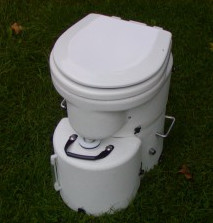
The Air Head toilet is small enough to be used in a camper van or on a boat.

what can I do?

Installing a compost toilet
There are many different types that you can buy. Here are some examples:
  • Separett or Air Head: buy from our partner Eco-Toilets – the Separett looks like an ordinary loo, and the Air Head is small enough to be used in a camper van or boat
  • Rota-loo: plastic, several chambers on a turntable, fan
  • Biolet: small toilets, some models electric, some not; distributed in UK by Wendage Pollution Control
  • Clivus multrum: one large chamber, vent with fan
  • Sun-mar: small; electricity used to evaporate liquids; distributed in UK by Eastwood Services – 01502 478165
  • Natsol: make their own twin-vault loos with stainless steel urine separator
There are many more, with new models coming on to the market each year – do the research to find which model might suit you best. Alternatively, you can build your own. This will work out cheaper, and there is no need for electricity. The components of a basic unit are: two chambers, platform, vent, hatch, and removable seat. Our book explains how to do it. Going on a coursemight be a good idea too.
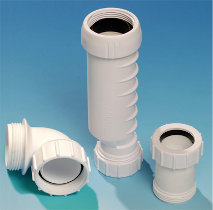
A HepvO valve is the simplest way to convert a conventional urinal to a waterless one.
Using a compost toilet
A compost loo is not a flush-and-forget system. A DIY compost loo needs to be checked every day to see that no problems are developing. If necessary, an ingenious fly-catcher can be made from a glass jar and a little cone made from perspex. Ensure that there’s a bucket with ‘soak’ (e.g. sawdust) next to the loo. To stop a ‘peak’ developing, it may have to be ‘knocked every couple of months with a rake or hoe either via the hatch or seat – this may not be necessary though.
Waterless urinals work well with compost toilets, as urine can be used as a completely-pathogen-free fertiliser, and it stops the compost toilet from becoming too wet. Waterless urinals can be adapted for female use too. Some compost toilets are designed to separate urine from solids.
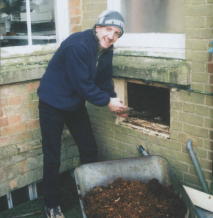
Emptying one of the chambers.
After the toilet has been used for a year, remove the seat and blank off the hole. Attach the seat to the second chamber. One year later, empty the first chamber and move the seat back. The material from the chamber will be indistinguishable from bag compost bought from a garden centre if it’s done properly. We’ve taken compost from a compost loo and from a garden centre to events around the country, and people couldn’t tell the difference.
The procedure is different for various kinds of manufactured toilets. See here for a detailed, step-by-step guide to getting and using a compost loo.
Source http://www.lowimpact.org/lowimpact-topic/compost-toilets/

Supplied by Committee Member Georgina Keam