East Essex Smallholders Chitchat Headline Animator

CONTACT EESG

To Contact EESG
Please Email:
Danielle.Perkins@yahoo.co.uk
or 07854595640

Monday, 14 January 2013

Who makes really good Bacon? In Essex

Who makes really good Bacon? In Essex

Can you suggest some Essex Producers who make mouth watering bacon who we could put forward for Bacon Connoisseurs week?

Email your suggestions to Danni: Danielle.perkins@yahoo.co.uk

Friday, 11 January 2013

Bug Hotel


I am currently building a bug hotel in the bottom of our wood, which we are currently trying to make a little more wildlife friendly.  I will post a picture when it is complete. But what a good bit of fun!

Have a look at how to construct one out of recycled materials

http://www.merthyr.gov.uk/English/EnvironmentAndPlanning/Countryside/Documents/How%20to%20Build%20a%20Bug%20Hotel.pdf

BACON CONNOISSEURS' WEEK

Having trouble reading this email? View it on your browser .
BPEXpress

Thursday 10, January 2013

BPEX Logo

'Great Bacon Revolution' Awards

The seventh annual Bacon Connoisseurs’ Week takes place from 18-24 March 2013. Growing in success each year, media coverage in 2012 provided over 200 million opportunities to hear, see or read about bacon!

The week has been established to communicate to consumers that ‘Not all Bacon is the same’. Under the theme ‘Great Bacon Revolution’ Awards one of the first activities is the hotly contested Bacon competition.

This year, there are four award categories to highlight to consumers the rich heritage of Bacon curing and how many different varieties of premium bacon are available:
          1. Classic Dry Cure
          2. Traditional Wet Cure
          3. Smoked
          4. The 'Revolutionary Rasher' Award

We are looking for some truly exceptional bacon within these categories plus something new and exciting within the ‘Revolutionary Rasher’ Award, to demonstrate how far our humble rasher has come in recent years.

So, if you think your bacon is up to the task and would like a chance to become the Bacon Connoisseurs Week 2013 Champion don’t delay, either go to porkforbutchers.bpex.org.uk to download an entry form today, or go to www.bpexentries.co.uk/bacon to complete and submit your entry form online.

But don’t take it from us, listen to the facts:
“With literally hundreds of varieties now available, bacon has grown to become a £1.36 billion industry with almost 30% of bacon now consumed as part of the evening meal.”

Completed entry forms must be received by Sunday 27th January 2013.

Good luck and we look forward to receiving your entry.
In the meantime, if you have any queries about the competition or the week please contact 0247 647 8809 or alternatively email BaconEnquiries@bpex.ahdb.org.uk

Kind regards

Keith Fisher
Butchery New Product & Development Manager
 
tdot

Thursday, 10 January 2013

Preserving Perseverance! - Katy Runacres

Preserving Perseverance!
Firstly, a big thank you to East Essex Smallholders for letting me guest blog-very exciting!


So a little bit about me: I am Katy, a Suffolk 23 yr old trying to currently live life a little greener and saving a bit of money along the way. I have Chickens at home who supply a constant amount of eggs for recipes, even through the cold dark days of winter! My veg growing of a decent salad crop and herbs has been put on hold till spring due to weather conditions here but there are still things to be done.

One of the things I have loved doing in the last few years has been preserving. Now I know everyone thinks of the WI and fetes when I say preserving but I think its all part of the fun of making preserves-the fact you can access a wealth of knowledge and advice from so many people and societies, you can enter fun competitions and gain lots more recipes to try or invent your own! I entered a local fete 2 years ago for the first time with a plum and apple jam; up against seasoned village preservers and actually got ranked with a certificate which was fun! At home in Suffolk I was making big batches of what ever glut of fruit we had-Strawberry, apple, plum or more commonly plum and apple! This caused me to on more than one occasion give friends and family plenty of jam for any celebratory event be it Christmas, a birthday or just for fun.


I love the fact that jam keeps so well and the recipes are easy to follow and you can change and alter them. Its nice to have something you can make a decent product out of-particularly if you are not good at other smallholding and self-sufficiency skills such as craft-like me! My family has experimented with some different preserves and flavours such as : crab apple jelly and quince cheese (both good with cold meats) and Indian pumpkin chutney. In the summer I was wanting to do a chutney. I tried a walnut, apple and pear chutney from a Scottish recipe
book which came out amazing and very tasty with cheese!


Lastly, trying something else potted I made my own vegetarian mincemeat for my mince pies this Christmas. I really enjoyed this and they turned out extra special. In the New Year I hope to try some other more unusual preserves-we will see how they go! I would say to anyone 'have a go what ever your age and wherever you live be it farm or flat-its good fun, easy and they make great home made presents!'


If you have enjoyed this article please feel free to take a gander with a cup of tea in hand at my blog http://thegoodlifeinpractice.wordpress.com/
about my on-going progress in smallholding both in Suffolk and Switzerland.


By Katy Runacres
The Good Life In Practice Blogger
twitter: @thegoodlifein
facebook: The Good Life In Practice


Tuesday, 8 January 2013

Bee concerns pose threat to OSR viability - 1/3/2013 - Farmers Weekly

Bee concerns pose threat to OSR viability

Charles  Abel
Thursday 03 January 2013 15:56

Oilseed rape growers could lose one of their most powerful weapons against pest and virus attack if fresh studies into the implications for bees prove valid. Crop revenues could tumble by £170m, leaving almost half of growers wondering if the crop is still worth growing.
At the heart of the debate lies the neonicotinoid group of seed treatment insecticides, primarily represented in the UK by Syngenta's thiamethoxam (in Cruiser) and Bayer's clothianidin (in Modesto). New studies suggest they could be contributing to, and may even have a primary role in, bee problems around the globe.
These powerful insecticides move into all parts of the plant, to control sucking pests like cabbage stem flea beetle, turnip sawfly and turnip yellows virus-spreading aphids. With easier crop management and a 0.35t/ha average yield response, virtually all UK crops are now treated.
But new studies suggest sub-lethal side effects could be contributing to bee colony collapse disorder. In June the French government banned Cruiser OSR, sending shockwaves around a crop protection industry fearful for the future of its fastest growing class of insecticides, with sales of well over €1.5bn/year.

AdTech Ad

The implications for farmers are stark too. French producers, forced to resort to broad-spectrum foliar sprays this autumn, can expect losses of up to €230m from lower yields, says Syngenta. A global ban would take €1bn/year from farmer pockets.
Timeline
  • March 2008 - Maize seed treatment error results in bee deaths in Germany
  • July 2012 - Cross industry ESTA European Seed Treatment Assurance scheme launched
  • June 2012 - Cruiser OSR banned in France
  • August 2012 - French court upholds ban
  • September 2012 - DEFRA rejects calls for a ban on neonicotinoids
  • November 2012 - UK Parliament's Environmental Audit Committee (EAC) hears evidence
  • Early 2013 - The European Food Safety Agency will report on its in-depth review into pesticides and their possible effects on bee health

Leading UK oilseed rape business United Oilseeds shares those concerns. "Should neonicotinoid use in the UK be prevented in the future, our growers would likely experience lower yields, poorer establishment and a raise in input costs from increased spraying requirements," a spokesman confirmed.
"As a farmer-owned co-operative, the welfare of the countryside and the environment is at the core of our ethos. But our current understanding is that there is significant debate about the robustness and validity of the French study that led to the ban in France.
"We also note that the European Commission has said it won't be rushed into a decision to ban neonicotinoids and that this decision is supported by the majority of member states."
A recent survey for Bayer of UK growers representing 15,000ha of OSR showed 87% felt a neonicotinoid ban here would adversely affect them, 86% felt crop establishment would suffer, 79% expected yields to fall, 90% would use more foliar sprays, 72% expected environmental implications, and 84% said they would have to spend more on pest control. Almost half (47%) said they would reconsider OSR cropping.
Campaigners opposed to neonicotinoids point out that bees provide a vital service pollinating crops, a recent Friends of the Earth study suggested they were worth an estimated £510m in the UK. Global bee pollination is valued at £128bn.
The genetic make-up of bees makes them particularly vulnerable, says the Soil Association, which believes there is enough evidence to justify an immediate ban. Green Party MP Caroline Lucas described Britain's attitude as one of "astonishing complacency".
Neonicotinoids used in sugar beet, wheat and barley could persist in soils, becoming available to bees when subsequent crops flower, the Pesticide Action Network suggests.
Clearly, neo-nicotinoids can harm bees - they are insecticides after all. So, growers need to heed label advice and not broadcast (or Autocast) treated seed, ensure it is well covered, avoid spills and carry a kit to clear up any that do occur, and particularly importantly, ensure any dust is retained in the product packaging, and if a pneumatic drill is used, modifications ensure any dust is vented into the seedbed and not the atmosphere.
Fine dust from maize drilling, which can contain up to 700,000 times the lethal contact dose for a bee, was linked to mass bee deaths in Germany and Italy. The newly instituted European Seed Treatment Assurance Scheme aims to prevent such acute poisonings.
Now the debate has turned to sub-lethal effects. Of course, a systemic chemical will be found in pollen and nectar at flowering, so bees do risk exposure. But how much residue bees are exposed to, whether it matters, and even more importantly, whether policymakers are listening to the scientific debate, or making politically motivated decisions, is unclear.
Not valid
French agricultural minister Stephane Le Foll banned Syngenta's Cruiser OSR in the light of two studies earlier this year which implicated neonicotinoids in hive collapse (see panel).
But Syngenta argued that the trials were not valid, and said the ban was "completely unfounded and contrary to any scientific and rational approach", not least because the trials force-fed bees unrealistically high doses, used an inappropriate model for bee colony decline, ignored official trial protocols, were inadequately replicated and took insufficient account of field conditions.
Cruiser OSR has been used on several million hectares of oilseed rape in Europe over the past 10 years without any damage to bees, noted Dr Phil Botham, Syngenta's European head of product safety. He pointed instead to habitat loss, colony collapse disorder caused by the parasitic mite Varroa and the viruses it carries (including a lethal form of deformed wing virus), and other honeybee diseases such as Nosema.
Keen to address bee decline, Syngenta promotes habitat creation through Operation Pollinator, and is now funding what it says is the most in-depth independent study of bee health issues yet, considering eight factors, including neo-nicotinoids, said Luke Gibbs, the firm's head of corporate affairs in Northern Europe.
It is also releasing its honey bee field trials data, which it says shows no effects on mortality, foraging activity, colony strength or over-wintering success during four consecutive years of exposure to thiamethoxam-treated flowering maize and oilseed rape. Pollen and nectar residue data from field trials is also being released.
Julian Little, government affairs manager for Bayer, notes that bee health showed no improvement in France even after a 10-year ban on imidacloprid seed treatment. Multi-factorial in-field studies with its successor, clothianidin, in several European countries, especially Germany for five years, would have hinted at sub-lethal effects, he says. But they never did.
In Australia, where neonicotinoid seed treatments are widely used, but Varroa and the associated viruses are absent, bees are the healthiest on the planet, he notes.
France wanted the European Commission and the European Food Safety Agency (EFSA) to impose an EU-wide ban. But EU Health and Consumer Commissioner John Dalli resisted, pending results from EFSA's two-pronged review into the approval of neonicotinoid active ingredients under the present regulations and the regulations themselves. Results are due in early 2013.
In the meantime no other country has followed France's lead, despite many reviewing the new studies.
DEFRA took advice from four independent bodies: the Chemicals Regulation Directorate; DEFRA's Food and Environment Research Agency (Fera) bee unit; Defra's Science Advisory Council; and the Advisory Committee on Pesticides.
Together with parallel work by EFSA that convinced it there were no serious implications for bee health. "There is a concern that the laboratory studies did not simulate adequately the field conditions," chief scientist Sir Bob Watson said.
The National Bee Unit at Fera found no evidence linking neonicotinoids directly to any case of bee mortality. Existing field studies on neonicotinoids showed no significant differences between hives exposed to treated crops and hives exposed to untreated crops.
But application methods, and lethal and sub-lethal effects, will be taken into account in a new risk assessment for bumble bees and solitary bees, alongside an updated risk assessment for honey bees, due in 2013, says DEFRA. Products failing to meet the new standards would have their authorisations restricted or withdrawn.
Meanwhile, the EU Agriculture and Rural Development Committee has asked the EC to increase research and produce an action plan to conserve bees. "When the action plan is produced, we are ready to give member states a deadline to use or not use a specific pesticide - until then it is up to individual states," said Paolo de Castro, the committee's chairman.
Finally, Parliament's Environmental Audit Committee is investigating the reasons why Defra has not taken more action, says chair Joan Walley. The worry is the number of sceptics on what is inherently a political committee, noted Syngenta's Mr Gibbs.
Indeed, anti-pesticide groups, keen to have pesticide use reduced or banned outright, are loudest in calling for a neonicotinoid ban, says Mr Little. Bee and pollinator groups, by contrast, want more research, and if a smoking gun is found, tighter regulations, he says.
Whether UK growers are subjected to restrictions or a ban remain to be seen. If they are, there seems to be every likelihood that ideology, not technical issues, could be to blame.

Bee concerns pose threat to OSR viability - 1/3/2013 - Farmers Weekly

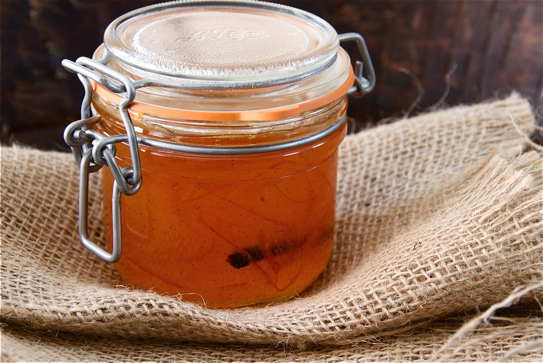
River Cottage Seville Orange Marmalade

 
Seville Orange Marmalade
The bitter Seville orange is the most traditional and arguably the finest marmalade fruit of all.
Prep time
  • Requires overnight soak
Cook Time
  • 25 minutes
Servings
  • 5-6 450g jars
Ingredients
  • 1kg Seville Oranges
  • 75ml Lemon Juice
  • 2kg Demerara Sugar

Directions
Scrub the oranges, remove the buttons at the top of the fruit, then cut in half. Squeeze out the juice and keep to one side. Using a sharp knife, slice the peel, pith and all, into thin, medium or chunky shreds, according to your preference. Put the sliced peel into a bowl with the orange juice and cover with 2.5 litres of water. Leave to soak overnight or for up to 24 hours.
Transfer the whole mixture to a preserving pan, bring to the boil, stirring until the sugar has dissolved. Boil rapidly until setting point is reached, about 20-25 minutes. Remove from the heat. Leave to cool for 8-10 minutes - a little longer if the peel is in chunky pieces - then stir gently to disperse any scum.
Pour into warm, sterilised jars and seal immediately. - For more information about sterilisation of containers, and all things preserves, get your copy of the DVD!

Monday, 7 January 2013

Our First Guest Blogger Revealed

I'm pleased to announce we have our First Guest Blogger following my post asking for people to share their experiences on the EESG Blog.

I would like to Introduce Katy Runacres from The Good Life in Practice
http://thegoodlifeinpractice.wordpress.com/

Katy also has a very interesting article in the lastest issue of Home Farmer.

We look forward to future posts from Katy.


A blog about smallholding and a 23 year old mad cat woman attempting to live a little greener and more environmentally friendly. First off with a garden in the UK and currently in a small apartment in Switzerland.
Just a little blog here about all the trials, attempts, successes and failures of trying to live a little greener regardless of where we are living-including having livestock, gardening, herb growing, wood-work, eco-friendly ideas, nature watching and some cooking using home-grown products (if the veg on the window sill continues to grow!).
Additionally, I take a particular interest in special diets-such as vegetarian new exciting dishes and gluten free options. I also try to keep up with the latest news on free range, organic and healthier ways of living in the news internationally-for example Bio-Suisse here is regularly updating their site.
I would love to write for Country Smallholding magazine, home farmer magazine or work for the Countryfile team as a new ex-pat here in Switzerland or to be a food/drink/countryside issues writer or presenter : ) I have a passion for sharing news and stories with others and making people more aware of issues. It would be great to hear any news from other people, discuss or share ideas to help smallhold and to live healthier even in the smallest/most random locations.
A little bit about The Good Life In Practice blogger Katy:
-Member of the Suffolk and Essex Poultry Club
-Has Level 3 Diploma in Countryside Management and Conservation.
-volunteering experience with The Isles of Scilly Wildlife Trust, Suffolk Wildlife Trust, Nottingham Wildlife Trust, Suffolk Coasts and Heaths AONB and has worked for English Heritage.
-Completed UK Brushcutting Certificate.
-has many years having cats, chickens and attempting to help my parents on the veg patch and now have my own patch of land to contend with! Also helping my father with cattle when I was young. Baking,cooking and catering for special diets regularly at home and at work.
-http://thegoodlifeinpractice.parttimecarnivore.org New site here linked to The Good Life In Practice–The Part Time Carnivore Campaign is NOT about eating no meat at all its about reducing our carbon footprint and to seek locally produced, organic or more sustainable meat to eat, please take a gander : )

Desperately Seeking
More people to share their stories.
Email Danni: